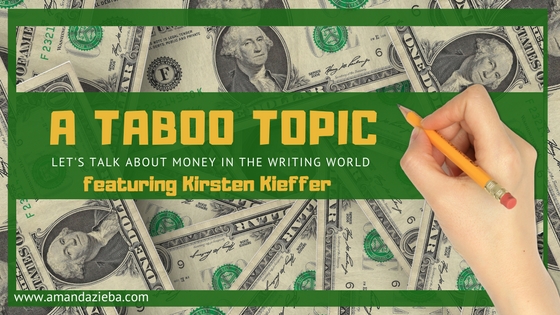
Writing and publishing can feel like a closed-door industry... not out of intention, but out of saturation and other factors. Your mission seems to be in direct contrast to that. What are your thoughts on this?
I once had someone email me to say that I should not be writing a blog about writing, as I haven't yet been published. "It's like driving a car without taking a road test," they said. "You can see how dangerous this is, right?"
There was a (large) part of me that grew angry at this person's words, but there was also a niggling voice at the back of my mind that reminded me of the truth: I knew why that person said those words. I knew their beliefs had been socialized into them.
In the Western world, we've devalued the arts to a place where they are nothing if they cannot be exploited. If there's not a profit to be made from your creative work, then your creative work isn't real. It isn't valid. Go get a real job. Stop wasting your time with that silly hobby. From day one, we're taught this. Even our children are asked, "What do you want to be when you grow up?" rather than "What hobbies do you enjoy?".
I'm a firm believer that publishing is not a validation of one's worth as a writer or storyteller. Do you love to write? Are you writing? You are a writer. Truly, it's as simple as that. And if I can foster that surety in other writers, if I can convince just one more creative not to dim their shine in the name of striving for validation they already have within themselves, then there are no lengths to which I would not go to make that happen. The pay-what-you-can program is just one more way for me to make that belief accessible to all.
Have you experienced barriers in the writing world and did they influence your decision to model your business this way?
In a way, I wish I could say I had. Experiencing barriers, at times, feels like a rite of passage in one's publishing journey. We all face hardship in the pursuit of our dreams, some more than others, and though these barriers may not be fun or even fair, they are our reality.
But as I haven't yet moved toward publishing (I'm only six years into my writing journey and am just beginning to find a measure of confidence in my work's publishing potential), I haven't yet had the pleasure of countless rejections or publishing biases. The decision to move forward with the pay-what-you-can program was born solely out of the desire to invest in the community of writers who had already given so much to me.
Did anyone tell you this was a poor business decision and try to talk you out of it?
Only myself. Haha! I certainly had my doubts when kick-starting this program. Being self-employed, I've read a lot about how freelancers and small business owners should charge more for their goods and services than they often do. I think many creatives, myself included, suffer from Imposter Syndrome and believe that if they don't make their products ultra-affordable, they'll never make sales.
I agree with the sentiment that creatives should know their worth and charge for it, but the pay-what-you-can program was never about making Well-Storied workbooks and offerings affordable. It was about making them accessible. Semantics, perhaps, but I believe this matters. What is affordable to some may not be affordable to others, so where does one draw the line when crafting their prices?
At Well-Storied, I try to teach the foundations of good writing, storytelling, and creative living so that writers of all ages, backgrounds, and incomes can make the most of their love for writing. I don't want a price tag to drive anyone away from doing what they love, so it's people over profit for me. We all thrive when we lift one another up.
How long has this been your model? How is it going?
I launched the pay-what-you-can program in the summer of 2017, and it's been a huge and humbling experience in my business journey. My fear of a large drop in income quickly proved unfounded. Instead, the program brought new and exciting connections with Well-Storied's readership. Writers in strong financial positions rallied around the program, supporting it through Patreon, Ko-Fi, and workbook downloads made at recommended purchase price (and beyond!), while I grew to know many writers who benefited from the program when they reached out to share their appreciation.
That said, the program isn't without its trials. The biggest blip came in the new year, when Well-Storied's monthly readership began to climb. This, of itself, was very exciting. Unfortunately, over the months to come, the ratio of writers who downloaded Well-Storied's resources at no charge grew wildly out of proportion. It became clear that a new wave of website visitors were abusing the program, which had worked with little trouble for more than half a year. This, in turn, began to make the program unsustainable.
After a lot of deliberation and conversation with the Well-Storied patrons who support the pay-what-you-can program, I decided to increase the minimum purchase price for all resources from $0 to $1.00 this April. This prevented those who would take advantage from further abusing the system, while still maintaining accessibility for writers of nearly any income bracket. In many ways, I was saddened to make this change, but the Well-Storied community was very supportive of it. I'm forever grateful for that.
Anything else you want to share that hasn’t already been covered?
As you can see, I get a weeeee bit passionate about this topic. If there's anything you would like me to expound upon, I would love to share. Just give me a shout-out via email.